

Description
Utility Trenching in Tempe by DEVCO Development and Engineering
DEVCO Development and Engineering provides professional utility trenching in Tempe and across Maricopa County for power, water, gas, sewer, and low-voltage communication lines. We work with general contractors, facility managers, HOAs, and property owners to install new underground utilities or upgrades, using the right equipment and layout so your lines stay protected and accessible long term.
What Utility Trenching Actually Involves
Utility trenching is more than just digging a straight line. We plan, excavate, bed, and backfill narrow trenches so pipes and conduits are protected, properly sloped, and separated from other utilities.
On most jobs, we’re working in tight sites, existing parking lots, or active facilities. That means careful layout, accurate depths, clean spoils management, and safe access for other trades while we work.
Trenching for Communication Conduit in Tempe
One of our most common requests is trenching for communication conduit Tempe projects—fiber, CAT cable, and other low-voltage systems. These lines are sensitive to damage and often need precise routing to future-proof your property.
We install conduit runs for ISPs, campuses, office parks, and multi-family developments, keeping proper separation from power and gas, using sweeps and bends that meet manufacturer specs, and making sure pull boxes and vaults end up exactly where your low-voltage contractor needs them.
Common Projects We Handle
Our Utility Trenching Tempe work covers a wide range of underground utilities. You might need us for:
- New power and communication service to commercial buildings or tenant improvements
- Domestic water and fire line trenches for new construction
- Sewer and storm drain laterals with proper slope and bedding
- Street and parking lot crossings for new utility corridors
- Residential infill lots and small subdivision backbone utilities
Equipment That Fits the Site
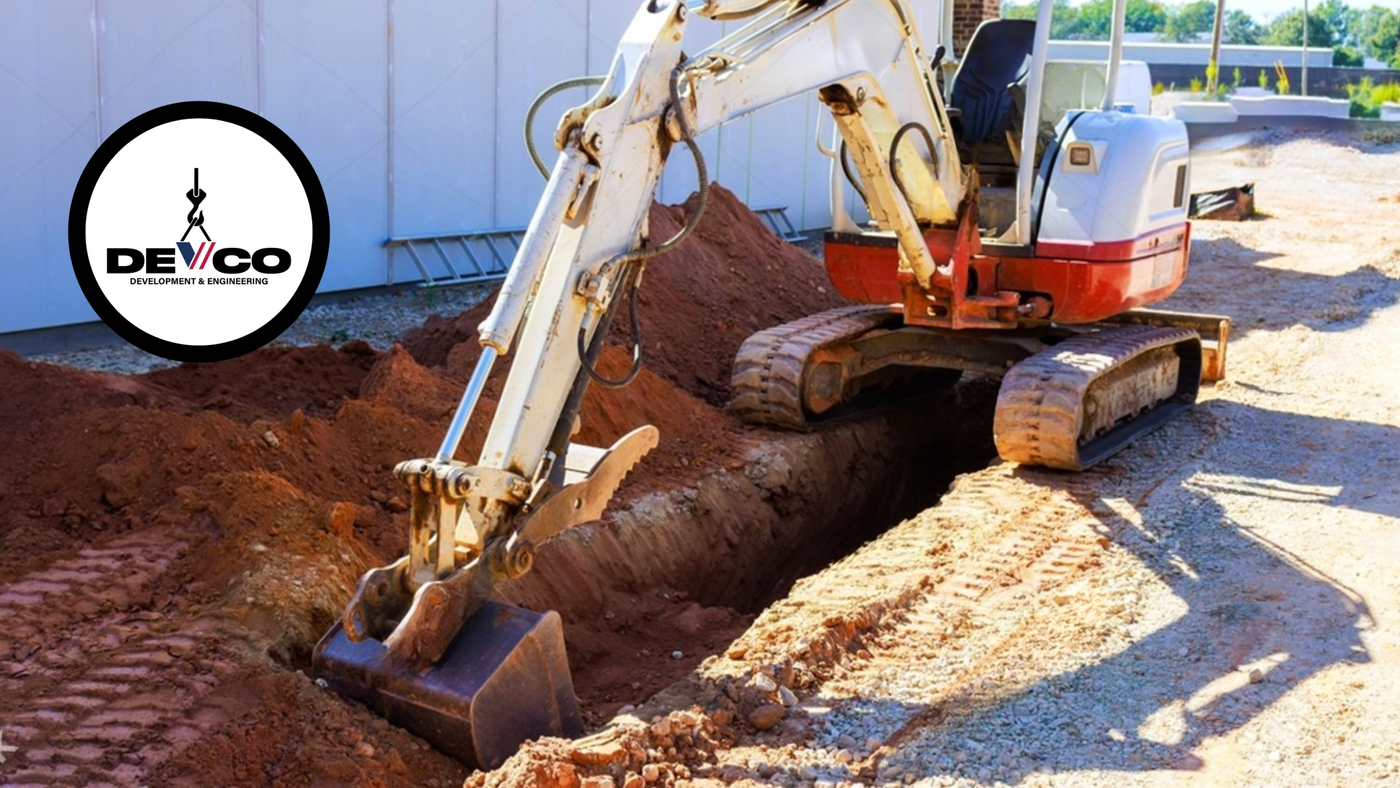
We match equipment to the job. A John Deere 210P excavator gives us reach and production on longer utility runs and deeper mainlines. For tight access between buildings or inside courtyards, a John Deere 35P mini excavator lets us trench without tearing up the whole site. Our John Deere 325G skid steer is used for moving spoils, backfilling, and grading once utilities are in.
What to Know Before We Start
Every trenching job is a little different, but there are a few things you should think about ahead of time:
Where will new utilities enter the building? Are there existing as-builts, utility maps, or survey data? Do you have schedule constraints around business hours, traffic, or campus activity? The clearer we are on these points, the smoother the work goes.
We coordinate with utility locators, other trades, and your project team to avoid conflicts, protect existing lines, and keep outages to a minimum.
Experienced vs. Inexperienced Trenching Contractors
On paper, trenching can look simple. In the field, inexperience shows fast—crooked trenches, wrong depths, poor compaction, damaged utilities, and failed inspections.
We focus on proper separation between utilities, stable trench walls and shoring where needed, clean bedding and backfill, and compaction that supports future paving or landscaping. That’s the difference between a trench that passes inspection once and one that has to be dug up and redone.
Common Questions About Utility Trenching
How deep will the trench be?
Depth depends on the type of utility, local standards, and site conditions. Power, gas, water, sewer, and communications all have different typical cover requirements. We work off your plans and applicable standards to set accurate depths and slopes.
How is pricing determined?
Costs are usually based on trench length and depth, soil conditions, surface restoration (asphalt, concrete, landscape), and the number of utility runs in the same trench. For a helpful overview, you can review our explanation of how utility trenching costs are typically calculated.
Why Contractors Work With DEVCO
DEVCO Development and Engineering is a DVBE (Disabled Veteran Business Enterprise) and also certified as SDVOSB, PDBE, SB-Micro, and SB-PW. Those designations reflect our experience, our systems, and our ability to perform on public and private projects with tight schedules and clear documentation.
If you’re planning underground utilities or trenching for communication conduit in Tempe or anywhere in Maricopa County, we’re glad to talk through your plans, constraints, and options. Call us at (951) 221-3633 or email info@devco-inc.com to discuss your project or request a quote.
Listing Details
-
CategoryUtility Trenching
-
CountyMaricopa County
-
CityTempe
-
Contact Emailinfo@devco-inc.com
-
Phone Number(951) 221-3633
-
ServicesUtility Trenching Tempe, Trenching for communication conduit Tempe